
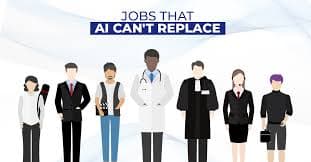
Artificial intelligence (AI) is rapidly transforming the world of work. Many jobs that were once done by humans are now being automated, and this trend is only expected to continue in the years to come. However, there are still some jobs that AI can never replace. These jobs typically require creativity, empathy, and complex decision-making skills that AI cannot yet replicate.
Here are some of the most AI-proof jobs:
- Artists and designers: AI is good at generating creative content, but it cannot yet match the creativity and originality of human artists and designers. Humans have a deep understanding of aesthetics and emotion that AI simply does not have.
- Writers and content creators: Like artists and designers, writers and content creators rely on their creativity and originality to produce their work. AI can be used to generate text, but it is often generic and uninspired. Human writers can produce content that is tailored to a specific audience and evokes a desired emotional response.
- Musicians and performers: AI can be used to create music and generate performances, but it cannot match the passion and energy of human musicians and performers. Humans have a unique ability to connect with their audience on an emotional level.
- High-level strategists and analysts: AI is good at processing large amounts of data and identifying patterns, but it cannot yet match the ability of human strategists and analysts to develop complex plans and make informed decisions. Humans have a deep understanding of the world and the ability to think creatively and strategically.
- Research scientists and engineers: AI can be used to assist with research and development, but it cannot yet replace the expertise and creativity of human scientists and engineers. Humans are essential for developing new ideas and solving complex problems.
- Legal professionals and judges: AI can be used to assist with legal research and analysis, but it cannot yet replace the judgment and discretion of human legal professionals and judges. Humans are essential for understanding the nuances of the law and making fair and impartial decisions.
- Leadership and management roles: AI can be used to assist with leadership and management tasks, but it cannot yet replace the human touch. Humans are essential for motivating and inspiring others, building relationships, and making strategic decisions.
- Human resources and talent acquisition positions: AI can be used to automate some HR tasks, such as screening resumes and conducting interviews. However, AI cannot yet replace the human element of HR, such as building relationships with employees and developing company culture.
- Therapists and counselors: AI can be used to provide some therapeutic support, such as chatbot therapy. However, AI cannot yet replace the human connection that is essential for effective therapy.
- Skilled craftsmen and artisans: AI can be used to automate some manufacturing tasks, but it cannot yet replace the skill and precision of human craftsmen and artisans. Humans are essential for creating high-quality products that require a high level of craftsmanship.
- Surgeons and healthcare professionals: AI can be used to assist with surgery and other medical procedures. However, AI cannot yet replace the expertise and judgment of human surgeons and healthcare professionals. Humans are essential for making life-and-death decisions and providing compassionate care.
- Athletes and performers: AI can be used to train athletes and performers, but it cannot yet replace the human drive and determination that is essential for success in these fields. Humans have a unique ability to push themselves to their limits and achieve their goals.
These are just a few examples of jobs that AI is unlikely to ever replace. These jobs require creativity, empathy, and complex decision-making skills that AI cannot yet replicate. As AI continues to develop, it is likely that some of these jobs will evolve. However, it is unlikely that AI will ever be able to completely replace the human touch in these fields.
Responses (0 )